

Choosing everyday shoes that actually fit
Comfort footwear used to mean supportive shoes that looked like a concession. That has changed — Skechers ranks just behind Nike in US consumer consideration in 2026, which tells you how mainstream comfort-first design has become.
Why comfort became mainstream
People walk more than they used to, and the shoes had to catch up. Cushioning compounds got softer without turning mushy, uppers moved to engineered knits that hold shape, and designers stopped treating a thick sole as something to hide. The stigma faded because the shoes stopped looking like an apology.
Brands such as Skechers built their reach on exactly this shift: comfortable everyday shoes with wide availability and accessible pricing, sold where people already shop. Walk into almost any mall in the country and the comfort wall is the biggest one in the store. That reach changed the default — a supportive shoe no longer signals that you have given up on style.
The practical result for a reader is choice. You can now find a shoe that handles a long commute, a wide foot, and a clean silhouette in the same box. The harder question is no longer whether comfort footwear can look right. It is which pair fits your week, and how to tell before you commit.

Wide availability, cleaner silhouettes
What to compare across brands
Four things matter most, and all four are easier to judge in the store than in a product listing. Compare these directly rather than by brand name, because the same label can make a soft commuter shoe and a stiff trail model in the same season.
Cushioning
Handles impact on hard surfaces. Press the midsole with your thumb — it should give and spring back, not stay compressed. A thin, hard sole feels fine for ten minutes and punishing by the end of a commute.
Impact
Arch support
Matters most if you are on your feet for hours. Feel along the inside of the footbed: a gentle rise under the midfoot is what keeps your ankle from rolling inward on long days.
Long days
Weight
Affects how tired your legs feel by the end of the day. Hold one shoe in each hand and compare; a few ounces over thousands of steps is the difference between a pair you reach for and a pair that sits by the door.
Leg fatigue
Outsole grip
Determines whether the shoe works in wet conditions. Run a fingernail across the tread — if it skates, so will you on a wet subway platform. Deeper, softer lugs hold better on smooth wet surfaces.
Wet surfaces
One caveat worth stating plainly: no single shoe wins on all four. A heavier sole usually grips better and cushions more; a lighter one feels quicker and tires you less. Decide which two of the four your week actually demands, and let the other two slide.
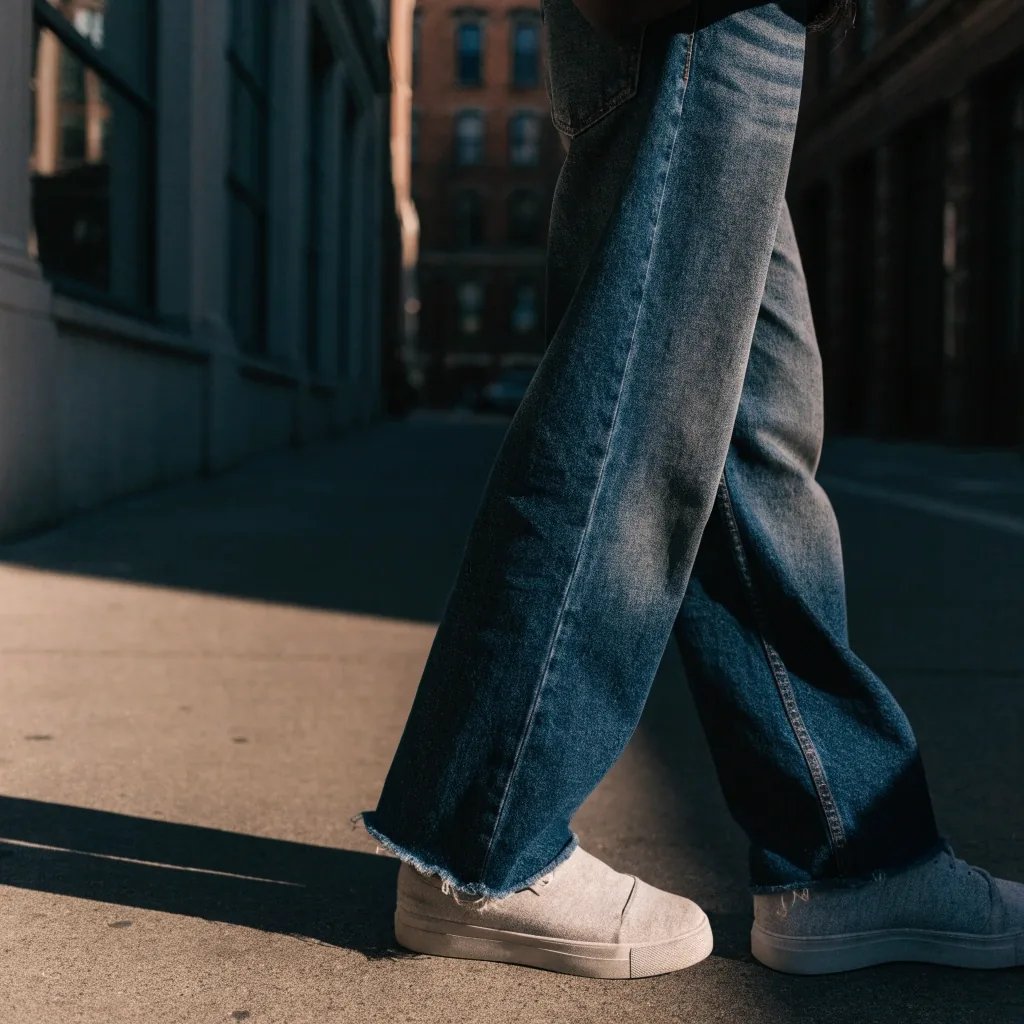
Skechers in context
Skechers is an American footwear brand known for comfortable everyday shoes and a broad mass-market footprint. In 2026 it sits just behind Nike in US consumer consideration, which reflects how many people treat it as a default when they need something that will not fight their feet.
Its strength is the everyday category: shoes for errands, commutes, and long days on your feet. The range is wide enough that the name alone tells you little — a memory-foam slip-on and a firmer walking shoe can carry the same label. Judge the specific pair on the four points above, not on the reputation of the brand.
That said, the reputation is not empty. Wide distribution means you can try the shoe on before buying, compare two widths in the same visit, and replace a worn pair without hunting. For a reader who wants a low-risk first step into comfort-first design, that availability is the real advantage.

Fit: the part people skip
Most footwear problems are fit problems, not brand problems. A shoe that pinches in the store will not loosen into comfort later, and a shoe that feels loose on day one gets looser as the upper relaxes.
- Measure late in the day. Feet swell through the day and reach their largest size by evening. Shopping in the morning is how people end up with shoes that hurt by five o'clock.
- Leave a thumb's width. There should be a thumb's width of space between your longest toe and the front of the shoe. That space is not wasted — it is where your foot goes when you walk downhill.
- Check width, not just length. Many shoes run narrow, and a shoe that fits in length can still press across the ball of your foot. If the sides bulge when you lace up, go wider.
- Test on your real surface. Store carpet hides everything. Walk on tile or pavement if you can — that is where a slippery outsole and a hard midsole show themselves.
Support, style, and value pull against each other
The right balance depends on your week, not on a ranking. If you walk a lot — a commute with two transfers, a job on your feet, a dog that needs miles — support wins and you accept a slightly heavier, chunkier shoe. If your workplace has a dress code, style narrows the field before comfort even gets a vote, and you shop within the cleanest supportive silhouettes you can find.
Value is the long-run question: how many months of wear do you get before the shoe breaks down? A slightly higher price with a longer life can come out ahead of a cheap pair replaced twice a year. The midsole is the part that decides this. Once it stops springing back, the shoe is done regardless of how the upper looks.
A pair that lasts eighteen months of daily wear usually costs less per month than two cheap pairs that each give out after a season.
Matching shoes to the rest of the outfit
Shoes set the tone for an outfit more than most people expect. The shoe decides the proportion of the whole look, and everything above it has to answer to that proportion.
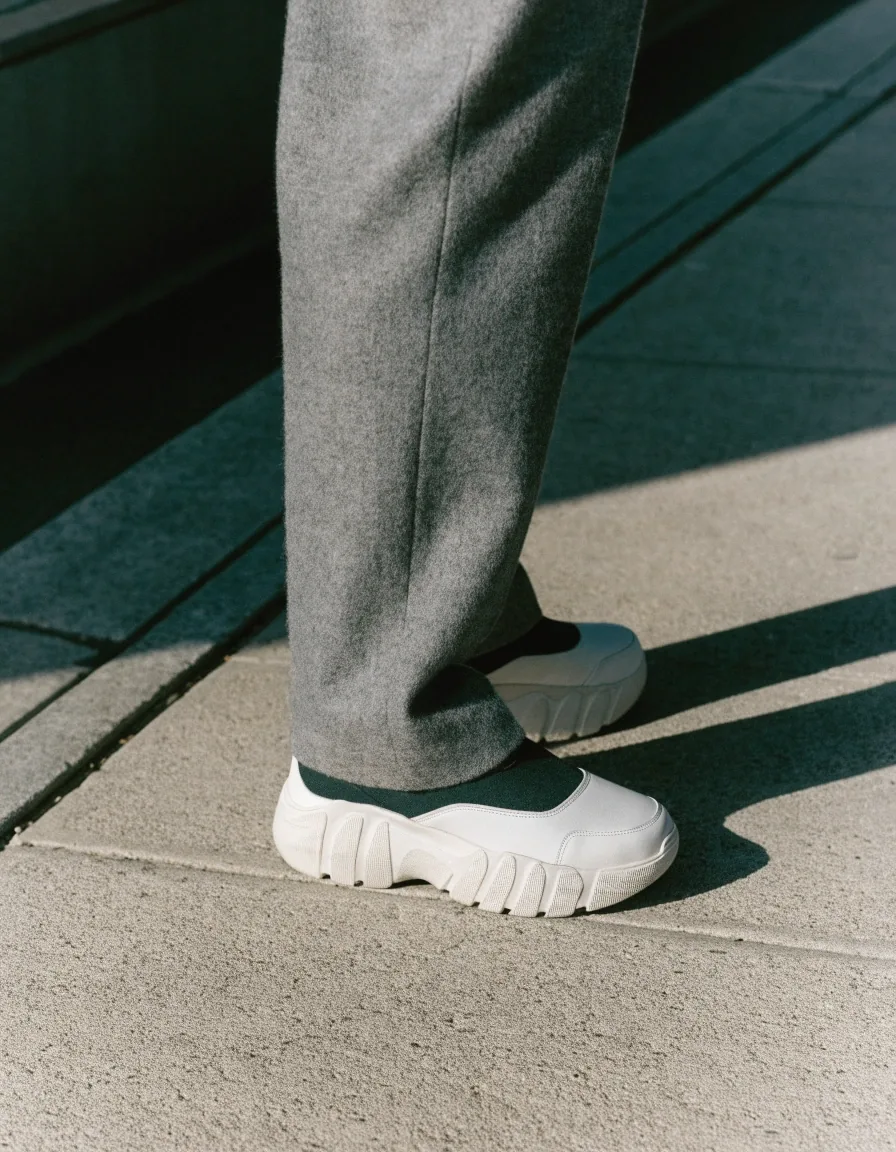

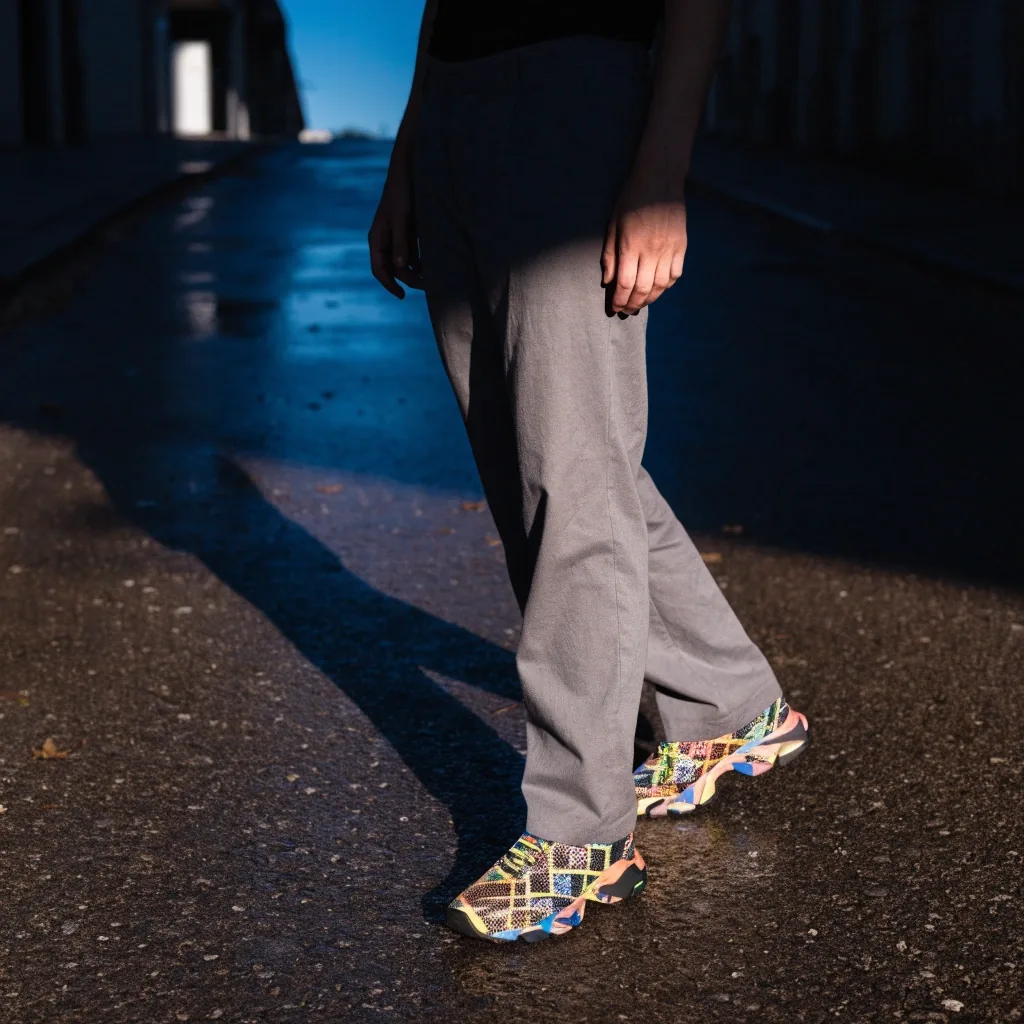
A chunky sole changes the proportions of the whole look, so the hem of your trousers should sit right against it — not bunch on top, not float above. Cropped or tapered trousers usually answer a thick sole better than a wide, pooling break. If the hem swallows the shoe, the outfit reads heavy at the bottom.
Clean, simple shoes in neutral colors work with almost everything, which is why they are the safe first pair. Loud shoes need quieter clothing around them to avoid competing: let the shoe be the one loud thing and keep the rest plain. When two loud pieces meet at the ankle, the eye has nowhere to land.
Where to go next
Footwear only lands once the rest of the outfit holds up. Our guides cover hem lengths, layering, and the pieces that do the most work in a small wardrobe.
When to replace a pair
Replace shoes when the midsole stops springing back, when the outsole is worn through in one spot, or when the upper no longer holds your foot. Uneven wear is a sign it is time — if one heel is ground down and the other is not, your stride is working against the shoe.
Keeping a worn-out pair in rotation is a common reason people assume comfort footwear does not work for them. They blame the category when the cushioning left months ago. If a pair you used to love now feels flat after an hour, that is the midsole talking, not your feet.
Building a two-pair rotation
Most people need two pairs: one for long days on your feet and one for everything else. Rotating them gives each pair a full day to dry out and recover its shape, and that rest is what extends the life of both.
If you only own one pair, make it the supportive one — the pair that handles a twelve-hour day — and add the second when you can. A clean, neutral second pair covers the outfits the supportive pair is too chunky for.
Not sure which of the two pairs to buy first, or whether a specific shoe will hold up to your week? Write to us and we will talk it through.
Send us a questionQuestions readers ask
Is comfort footwear only for casual outfits?
No. Clean, simple designs in neutral colors work with most everyday outfits, including smart casual. The silhouette of the shoe matters more than the category — a low-profile supportive shoe in a plain color reads much the same as a dress shoe at a glance. Save the chunky soles for the days when you are dressing around them.
How do I compare brands fairly?
Compare cushioning, arch support, weight, and grip, then factor in how long the shoe lasts. Brand reputation is a starting point, not the answer — every large brand makes both a soft everyday shoe and a firmer one, and the name on the box will not tell you which you are holding.
Does a higher price mean a better shoe?
Not automatically. Price buys better materials and more careful construction, but a cheap shoe that fits your foot well beats an expensive one that does not. The honest measure is cost per month of wear: a pair that lasts a year and a half often comes out cheaper than two pairs that each give out in a season.
Get the fit right and the rest follows
Start with the pair you will wear most, judge it on cushioning, arch support, weight, and grip, and give it a full day before you decide. If a question comes up that this comparison did not cover, we are happy to talk it through.
Brooklyn Hotdog · 452 Mercer St, New York, NY 10013, USA
Monday–Friday, 9:00 AM – 6:00 PM · Contact us