
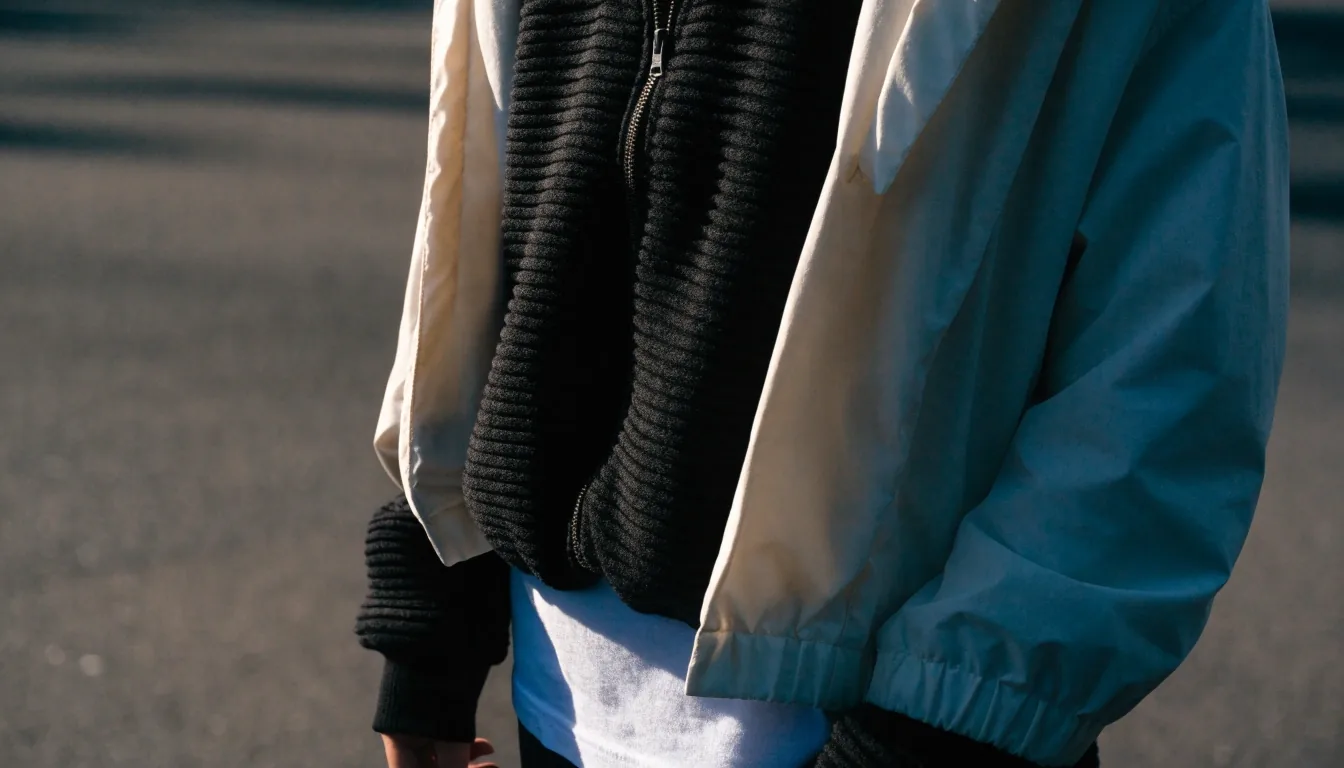
The basics that hold everything together
Tees, socks, underwear, and the plain layers you reach for more than anything else. This guide walks through choosing them well, with reference to Hanes and Fruit of the Loom.
Why basics are a real category
Basics aren't a default; they're a layer with a job. They sit closest to the body, which means they have to manage moisture, fit, and comfort while staying invisible under everything else. When they fail, the whole outfit suffers: a riding hem or a visible line ruins an otherwise good look.
Treating basics as a category means giving them the same attention as outerwear. A plain tee and a decent pair of socks get worn more often than any jacket you own, and they are the pieces that decide whether the outfit above them reads as considered or thrown together.
This guide covers how to build that foundation, with reference to Hanes and Fruit of the Loom, two American brands that appear on US fashion brand consideration lists.
Base layers and how they behave
A base layer should sit flat and stay put. Cotton works for everyday wear; blends with a small amount of stretch handle movement better. Buy a few in the same size and rotate them so nothing wears out ahead of everything else.
Underwear and socks
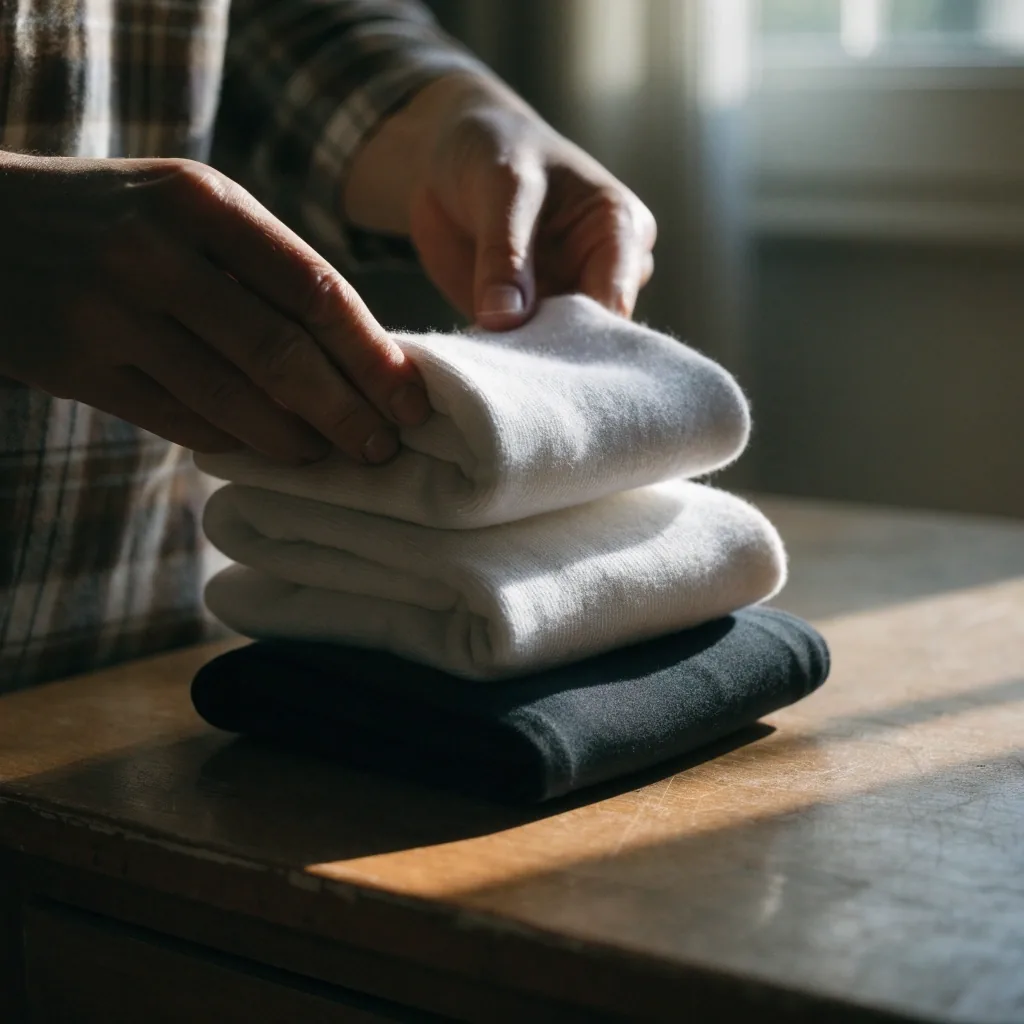
These are the pieces people replace most often and think about least. Fit matters more than brand: underwear should stay in place without pressure, and socks should match the shoe you're wearing. Buy them in multiples so a laundry day doesn't break your week.
It is a small decision that removes a daily annoyance. When a waistband loses its grip or a sock goes thin at the heel, that garment has already cost you more mornings than a replacement would.
Tees, the workhorse
A good tee holds its shape after washing, sits at the right length, and takes a layer over it without bunching. White and a couple of neutrals cover most situations. Heavier fabric tends to hold up better and drape more cleanly than thin cotton.
Once you find one that works, buy the same tee in several colors. That removes the guesswork from getting dressed and keeps the pieces that sit under everything else consistent from week to week.
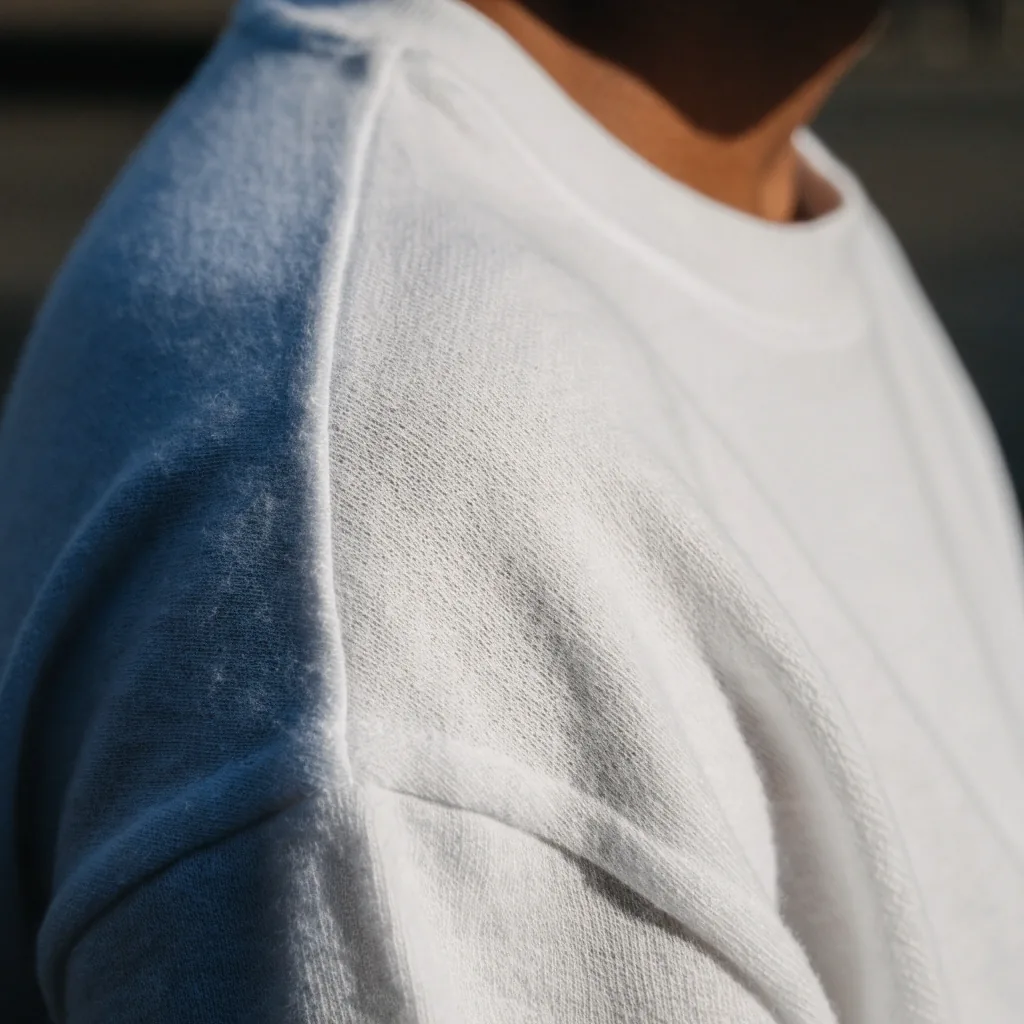
Heavier cloth holds its line
Layering on top of basics
Each layer should be slightly roomier than the one beneath it. The base layer's job is to stay out of the way so the layers above can do theirs.
Once the base is right, layering gets easier. A thin tee under a sweatshirt under a jacket creates warmth without bulk, and the pieces underneath stay smooth instead of bunching at the seams.
Base
Flat, fitted, and mostly out of sight under the rest.
Mid
Sweatshirt or knit that adds warmth without adding bulk.
Outer
The roomiest piece, worn loose over the two beneath it.
Cost per wear, not sticker price
The useful measure for basics is cost per wear, not the price on the tag. A tee you wear forty times costs less per outing than a cheaper one that loses its shape after five washes.
Mass-market basics brands compete on exactly this: reliable quality at a low price. That is the trade they are built around, and it is why the same plain tee can look like two very different purchases depending on how long it lasts.
How to know when to replace something
Replace basics when they stop doing their job: stretched collars, thin fabric, elastic that no longer holds. A simple rule is to check them at the start of each season.
If you'd be uncomfortable wearing it under a jacket, it's done. Keeping worn-out basics in rotation costs you more than replacing them, because every morning you reach past them to find the two pieces that still work.
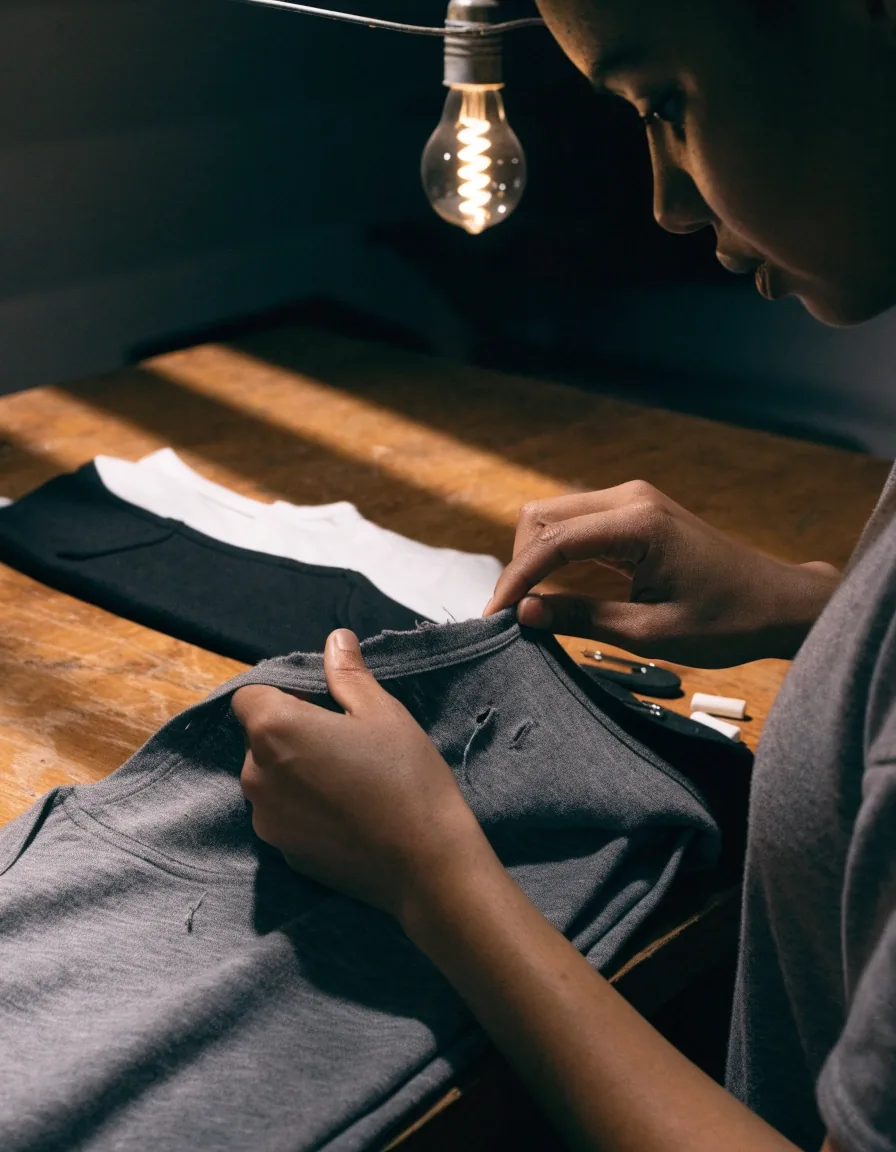
Collar and seam tell you first
Building the foundation in stages
You don't need everything at once. Start with the pieces you wear weekly, then fill in as you notice gaps. A small, consistent set of basics beats a large, uneven one.
Once the foundation is stable, the rest of your wardrobe has something to build on. Adding a layer above is easier when the layer beneath it already fits.
A stable base makes the rest of the wardrobe easier
Start with the pieces you wear most, replace them when they stop working, and let the outer layers follow. The guides, brand profiles, and footwear notes below cover what sits on top of that foundation.
Questions readers ask about basics
Short answers to the details that come up most when people start rebuilding the bottom of a wardrobe.
Still deciding where to start? The About page explains how these guides are put together, and the contact page lists our New York address and weekday hours.
How many of each basic should I own? Open
Enough to cover one laundry cycle plus a small buffer. Most people find that six to eight tees and ten or more pairs of socks and underwear keep a week running without a midweek wash, but the number should follow how often you actually do laundry, not a fixed target.
Cotton or a stretch blend? Open
Pure cotton breathes well and washes simply, which suits everyday wear. A blend with a small amount of stretch holds its shape through movement and tends to keep a closer fit. Many wardrobes end up with both: cotton for the plain layers and a blend for anything worn under active days.
Why do Hanes and Fruit of the Loom come up so often? Open
Both build their reputation on practical everyday garments rather than seasonal fashion, and both appear on US fashion brand consideration lists. That is why they show up in wardrobe lists instead of fashion headlines: the pieces are meant to be replaced quietly and bought again in the same size.
How should I care for basics so they last? Open
Wash cooler than you think you need, skip the dryer for anything with elastic, and fold knitwear rather than hanging it so the shoulders keep their line. Small habits like these are what make the cost-per-wear argument work in practice rather than only on paper.