
American streetwear, without the noise
Silhouette, storytelling, timing. This is a reading guide to the labels that shape the category now — Fear of God, Denim Tears, Stüssy — and to the proportions that make an outfit read as intentional.
What defines streetwear today
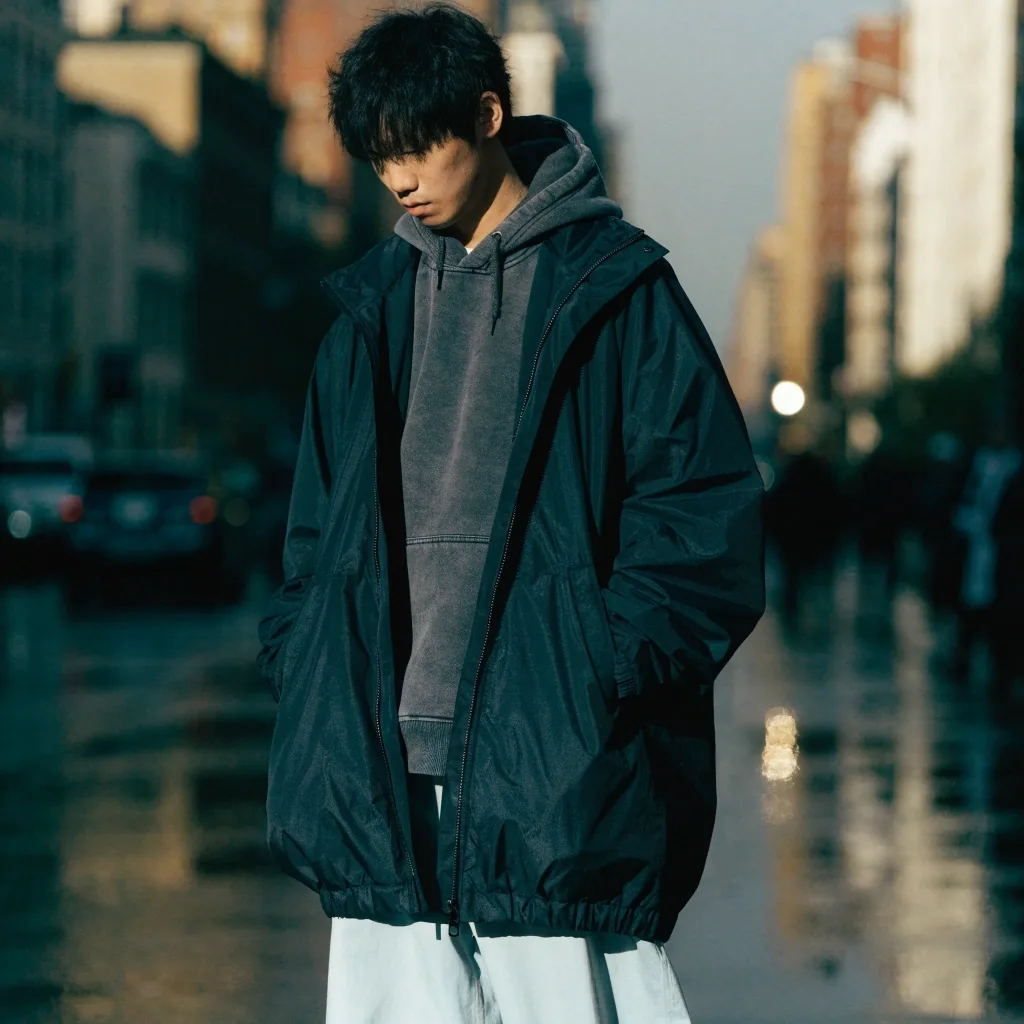
Streetwear is casual clothing with a strong visual identity and a cultural position. The silhouettes tend to be relaxed: wider shoulders, longer hems, and volume through the body. Graphics and branding carry meaning that plain clothing doesn't.
What separates a real label from a fast imitation is usually consistency, not a single design. A brand that has held one proportion and one graphic language across several seasons gives you something a trend-chasing copy cannot: pieces that still work together three years later. That is the practical reason to learn the names before you learn the drops.
In the United States, the category also runs on place. Surf and skate scenes on the coasts, music and street culture in the cities, and a steady feed of American iconography folded back into graphics. Reading those references is half of dressing in the style; the other half is getting the fit right.
Fear of God and quiet luxury
Fear of God is a luxury-oriented streetwear label, often mentioned alongside ESSENTIALS. It's known for a subdued palette, heavy layering, and oversized silhouettes. The brand's contribution is showing that streetwear could be restrained and still feel expensive.
In practice, its pieces reward a wardrobe built on neutrals, because there's little to clash with. If you already own grey, oatmeal, and washed black, a single piece in that register slots in without a plan. The label also pushed the category toward longer hems and heavier fabrics, which is why the relaxed cut you see everywhere now reads as considered rather than sloppy.
More label profiles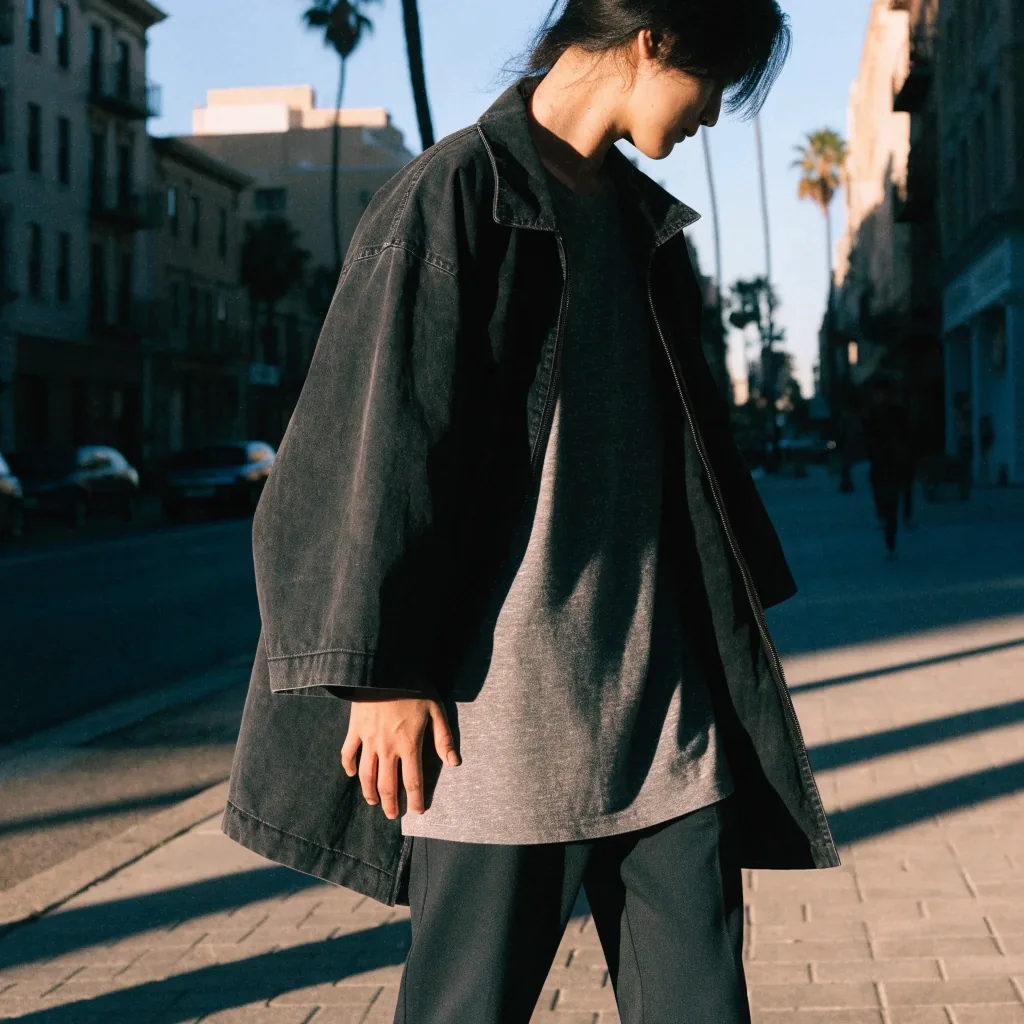
Storytelling and the long game
Two labels show the two ways a brand earns a place in the wardrobe: one through a message, one through patience.
Denim Tears
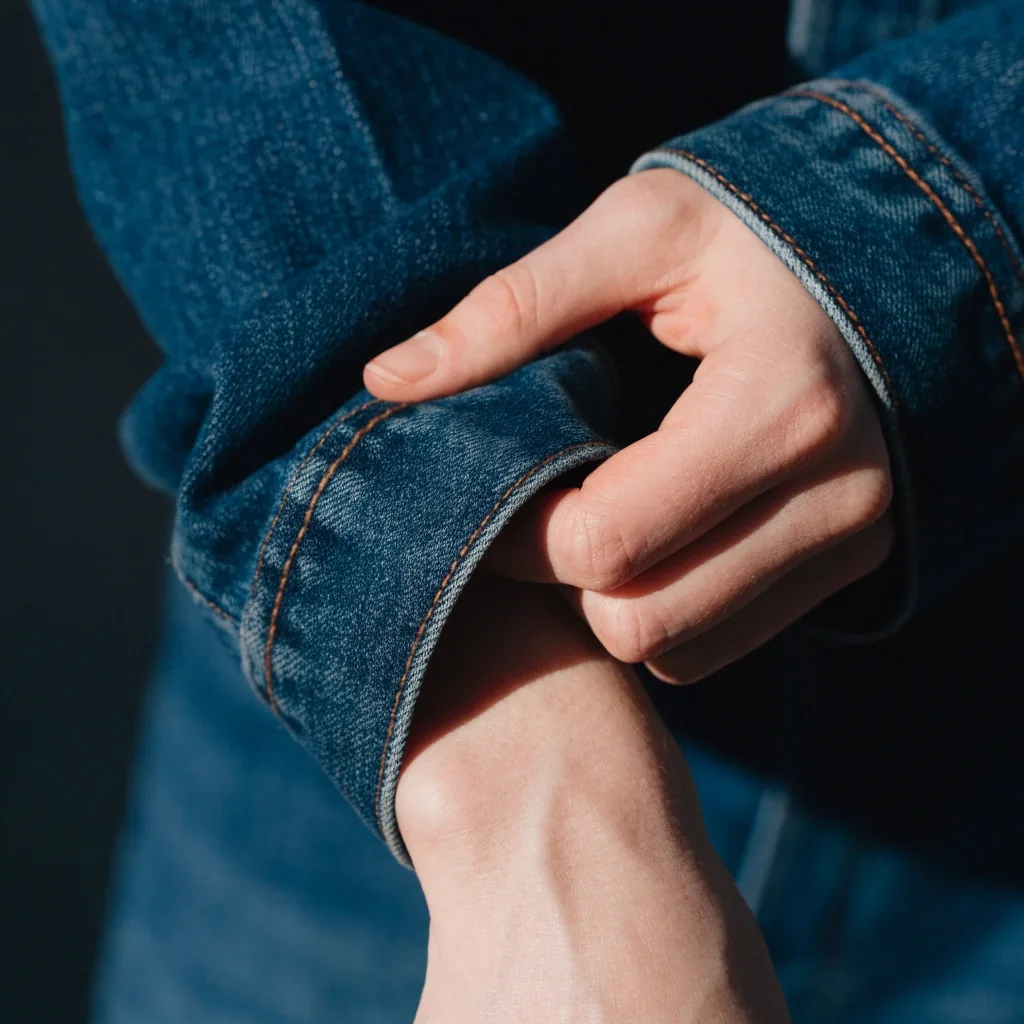
Denim Tears appears regularly on best-streetwear lists, and its reputation rests on graphics, denim, and culturally loaded storytelling. The label sits at the intersection of fashion, identity, and American iconography. That makes its pieces function differently from a plain base layer: they carry a message, and they ask to be read. Wear them as the focal point, not as filler — one graphic piece against a quiet outfit does more work than three competing prints.
Graphics and denim
Stüssy
Stüssy is one of the foundational American streetwear names and stays near the top of streetwear lists. Its surf and skate roots are still visible in the graphics and the relaxed cuts. What's notable is durability: the label has held its visual language for decades without a dramatic relaunch. That consistency is the hardest thing in this category to achieve, and it's why a Stüssy piece from years ago still reads as current on the street.
Surf and skate roots
ESSENTIALS
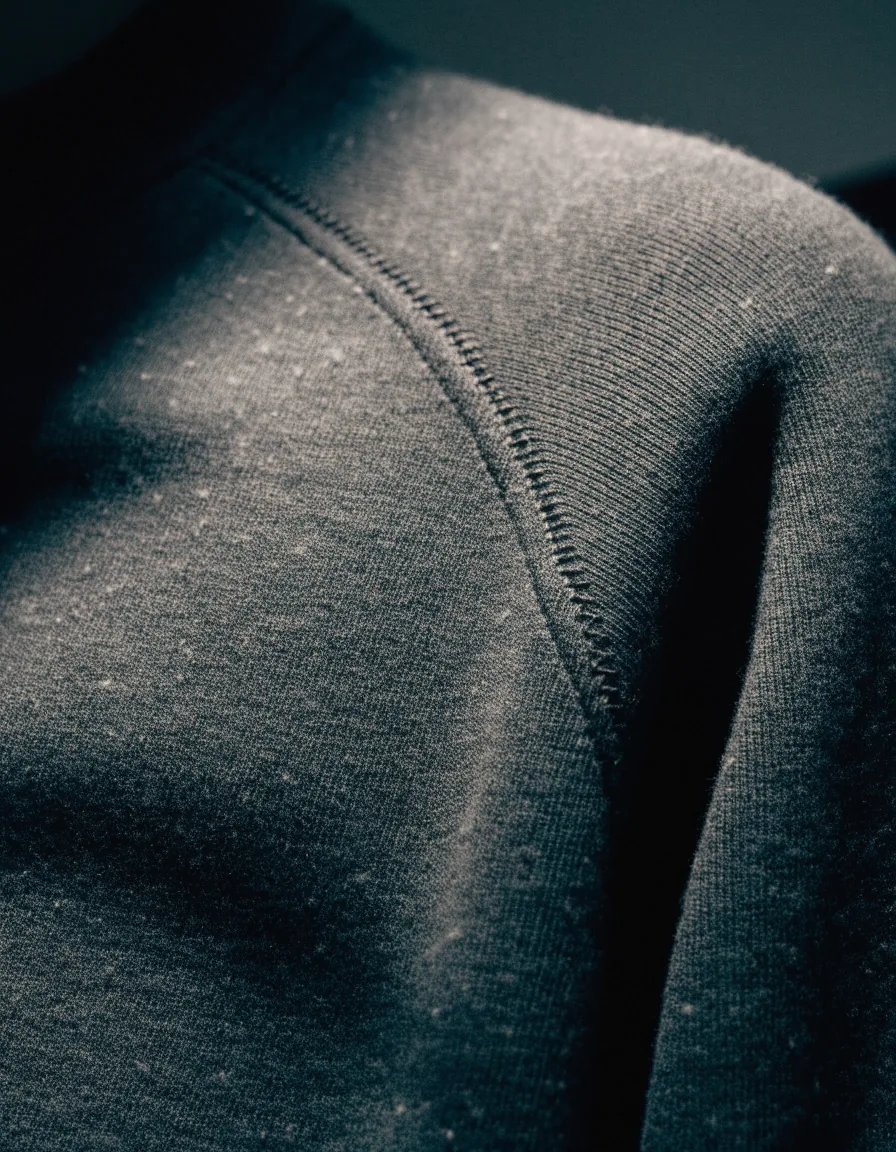
The Fear of God sub-line that made the neutral palette accessible. Basic crewnecks, sweatpants, and hoodies in a tight grey-to-black range, cut generously through the body. It is the easiest entry point into the relaxed proportion without committing to a statement piece, and it pairs cleanly with almost anything already hanging in a wardrobe.
Neutral base layers
For readers who want the wider picture, our brand profiles cover more American labels and where each one sits in the category.
Oversized done right
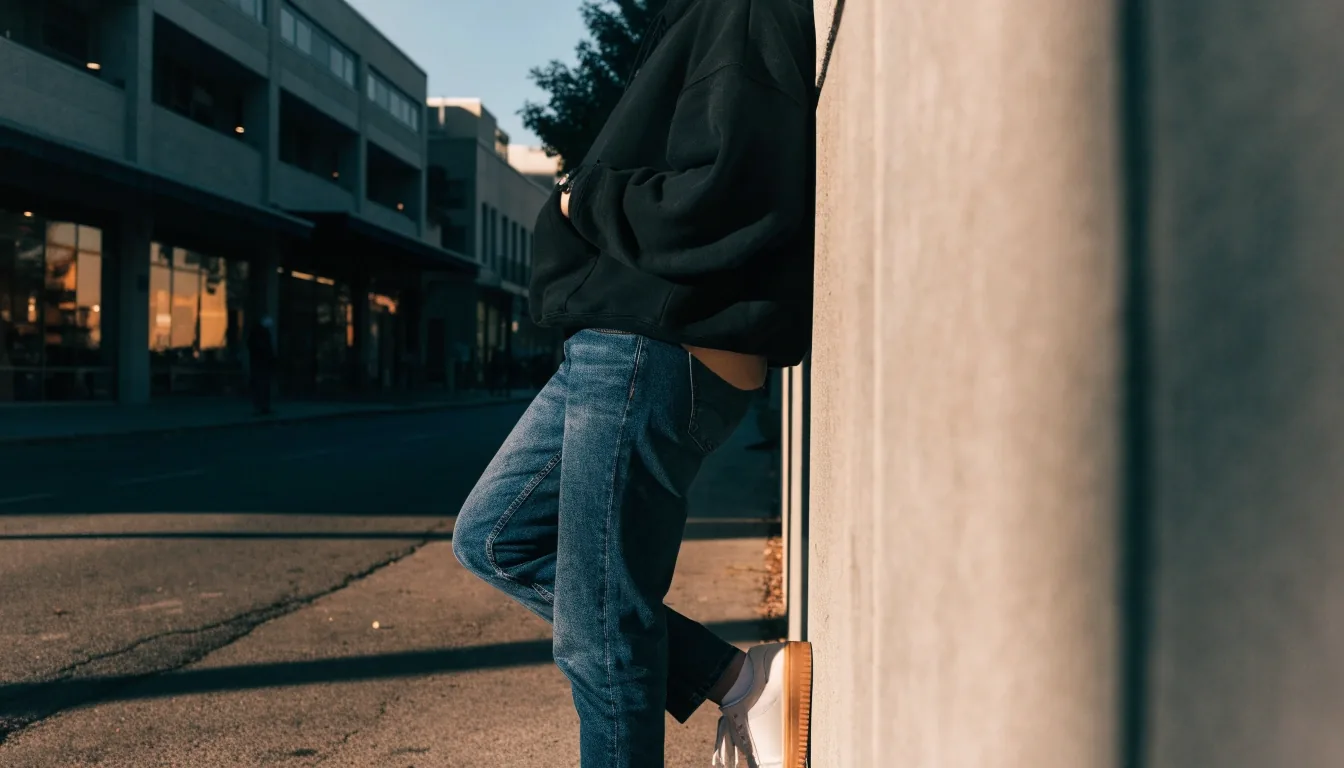
Oversized doesn't mean shapeless. The trick is balancing volume across the outfit: a wide top over a slimmer bottom, or the reverse. Keep one element fitted so the proportions read as intentional.
Shoulder seams should still sit near your shoulders, even on a relaxed cut. That single detail decides whether a garment looks chosen or borrowed. If everything is loose, the outfit loses its shape and the eye stops reading the body — which is the opposite of what a good silhouette does.
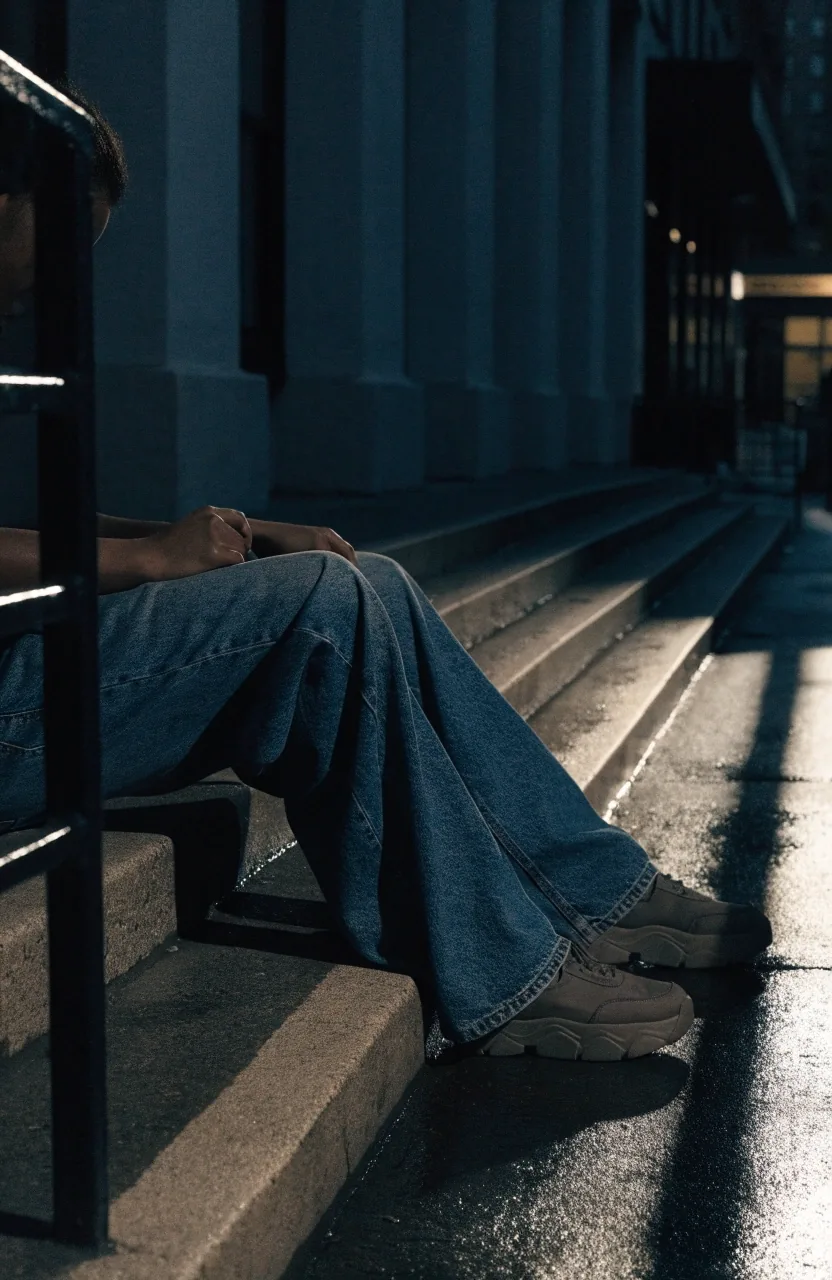
A working rule: change one axis at a time. Wide top with a straight leg reads deliberate. Wide top with a wide bottom needs a hard break — a cropped hem, a tucked layer, or a defined shoe — to keep the line from turning into a block.
- Shoulders — seams near the natural shoulder, drop shoulders only on a garment cut for them.
- Hem — a longer tee under a shorter jacket keeps the layers visible.
- Trousers — a straight or wide leg balances a big top; tapered bottoms fight it.
Layering in streetwear
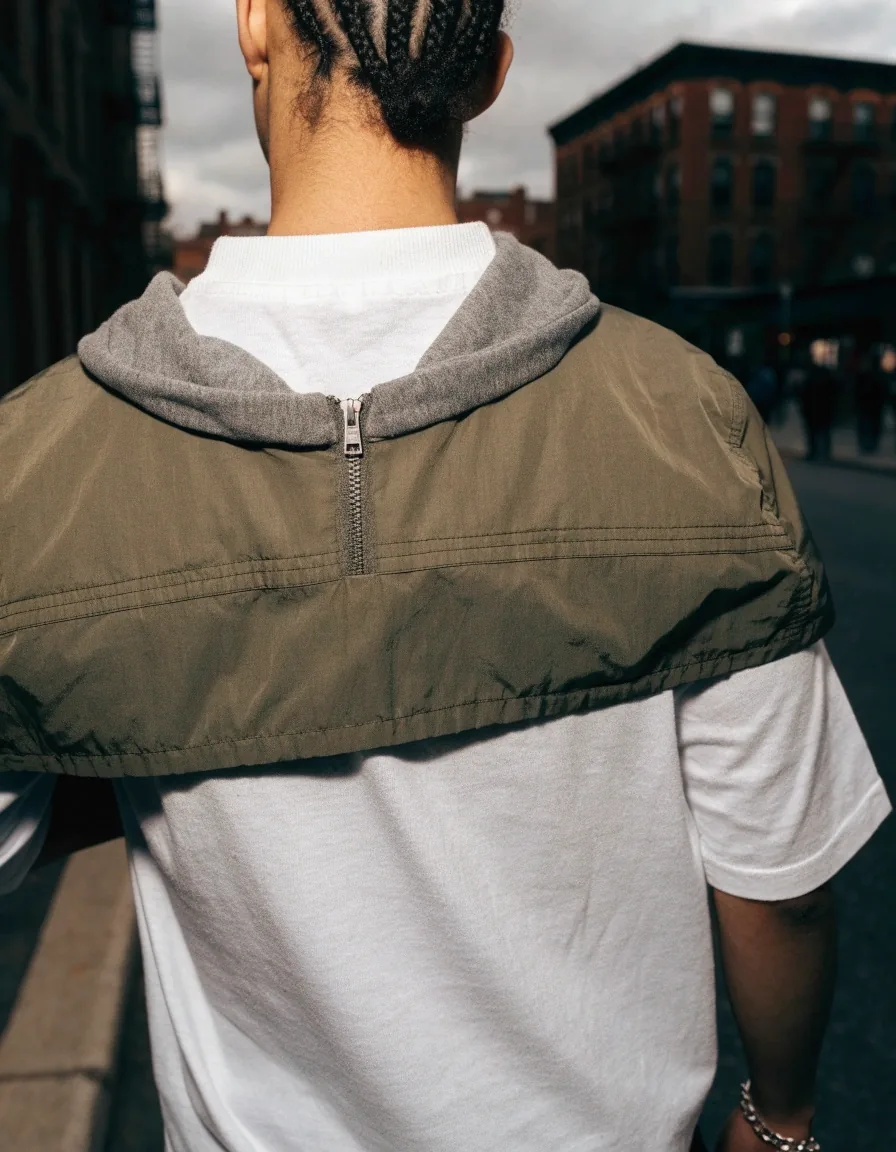
Streetwear layering favors length and texture. A longer tee under a shorter jacket, a hoodie under an overshirt, or a base layer under a heavy flannel all create depth. The eye reads the stack before it reads any single piece, which is why the order matters more than the item count.
Keep the palette tight so the layers read as one outfit. Two or three tones are usually enough, and neutrals make the graphics easier to place. If a graphic is the point, everything under it should be quiet; if the layering is the point, the graphic can wait for another day.
Weight is the second dial. A heavy outer layer over a light inner layer hangs cleanly; two heavy layers in the same tone collapse into a single dark mass. Give each layer a different surface — smooth under textured, matte under washed — and the outfit keeps its edges even in flat light.
The drop model
Limited releases create urgency, which is the point. The practical response is to decide what you actually want before a release, not during one. If a piece doesn't fit your existing wardrobe, the scarcity isn't a reason to buy it. Ask whether you'd still want it a month later — the honest answer is usually clear once the release window closes.
A short list written down in advance does more for your wardrobe than any refresh strategy. Note the gaps — a neutral top, a mid-layer, a pair of denim that actually fits — and check a release against that list instead of against the mood of the moment.
Avoiding common beginner mistakes
The most common mistake is buying graphics without thinking about silhouette, which leaves you with pieces that don't combine. The second is chasing a drop and ending up with something that doesn't fit your week. Build the base first: denim, a neutral top, one jacket. Then add the statement piece.
A third one is quieter and costs more over time: buying the same tone three times. Three grey hoodies are one hoodie with extra storage. Change the surface instead — washed, loopback, fleece — and the same palette starts doing real work.
The base four
Denim that fits, a neutral crewneck, one mid-layer, one outer shell. Everything else is a variation on those four.
Understand wardrobe basicsThree details that carry the look
Questions readers ask
Is streetwear still relevant in 2026?
Open
Yes, though the emphasis has shifted toward restraint. Fear of God's subdued palette, Denim Tears' cultural storytelling, and Stüssy's consistency all point in the same direction: quieter, more considered pieces.
Do I need to buy limited drops to dress in this style?
Open
No. The silhouettes matter more than the release. A relaxed fit, a tight palette, and a few well-chosen pieces get you most of the way — and they keep working after the drop has sold out.
Where do basics fit in a streetwear outfit?
Open
They're the foundation. A plain base layer under an oversized top or a graphic piece keeps the outfit from becoming cluttered, and it gives the statement piece room to read.
How many colors should one outfit carry?
Open
Two or three. A neutral base plus one tone is enough for most days; a graphic piece can take the third slot. More than that and the layers stop reading as one outfit.
Read the labels, then build the base
Start with the profiles if you want the context behind each name, or go straight to wardrobe basics if you'd rather fix the foundation first. Either route gets you to an outfit that reads as considered.
Questions about a piece, a fit, or where to look next? Write to us at [email protected] or use the contact page. Brooklyn Hotdog, 452 Mercer St, New York, NY 10013. Phone +1-212-555-0184, Monday to Friday, 9:00 AM to 6:00 PM.